

Curtains
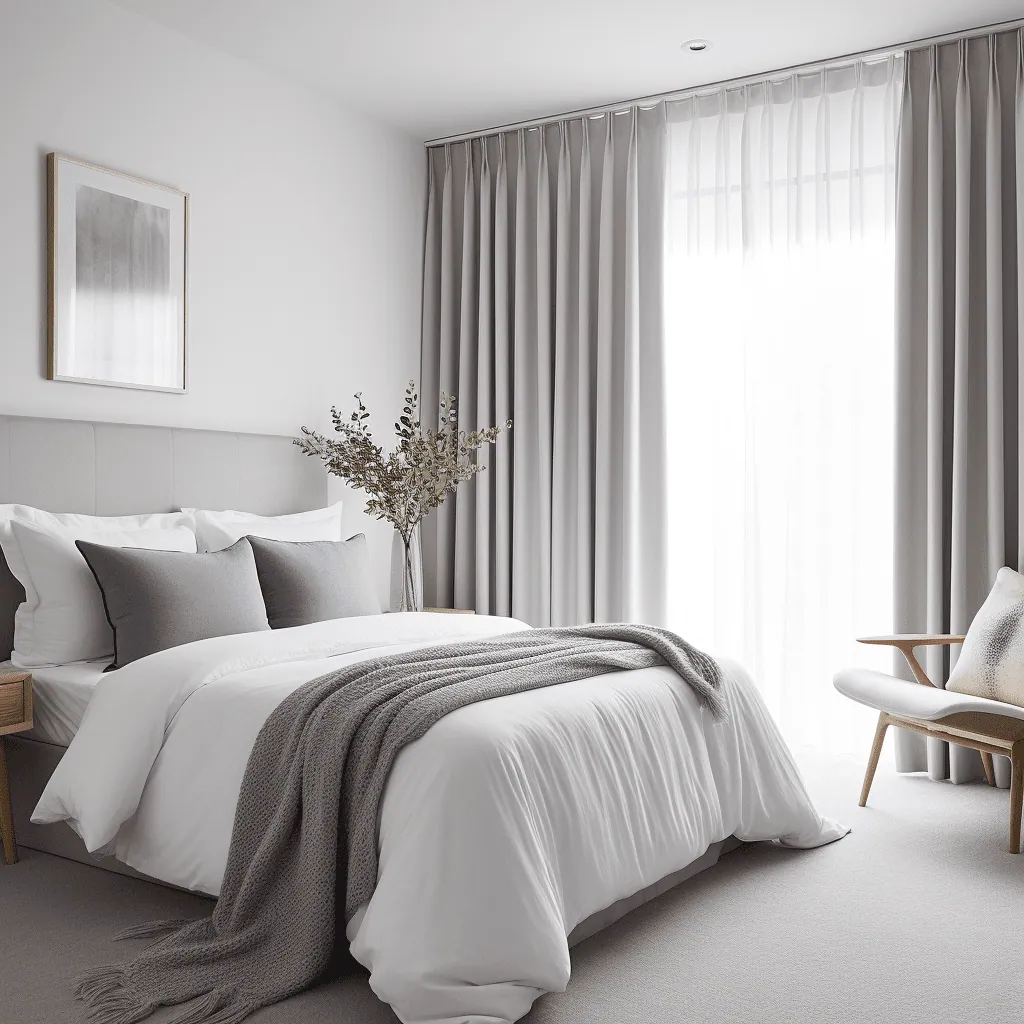
A sheer curtain softens daylight. A blockout layer gives you more control when you want privacy or a darker room. Putting the two together lets you change the room through the day—but fabric alone does not determine the result. Tracks, overlap, returns and space for the open curtains matter too.
What each layer does
Sheers filter light and soften the view. Their appearance varies with weave, colour and the light behind them. Hold a sample against your window, rather than judging it only against a showroom wall.
Blockout curtains use a fabric or lining intended to block light through the material. Light can still enter around the edges of the installed curtain. “Blockout fabric” is not a promise that a whole room will be completely dark.
With separate tracks, the layers can move independently: sheer across during the day, blockout closed when needed, or both drawn back when you want the window open to view.
Will sheers give me privacy at night?
Do not rely on sheers alone for night-time privacy. When a room is lit and it is dark outside, people may be able to see through the fabric. The effect depends on the weave, lighting and viewing angle.
If privacy is important, consider the view from the street or neighbouring property as well as from inside. A bedroom and a living room beside a private courtyard can need quite different solutions.
Plan where the curtains go when open
The folded curtain needs somewhere to sit. This is called its stack-back. If there is little wall beside the window, some of the open curtain may remain across the glass.
Two layers need space for two sets of folds. Fabric thickness, heading and fullness all affect that space. A narrow bulkhead that looks ample on a drawing may be tighter after plasterboard and finishes are installed. Confirm the finished clearance before committing to tracks and curtains.
Ask to see how your proposed combination looks both open and closed. That is more useful than choosing a heading from a close-up photograph alone.
Fullness, headings and lining
Fullness describes how much fabric is used relative to the width being covered. More fabric changes the appearance and the space occupied when open; it is not automatically the better choice.
An S-fold heading creates a repeating wave. Pleated headings give a different shape at the top and a different stack. The rear curtain needs room to move without catching the front layer, handles or nearby furniture.
An attached lining moves with its curtain. A separate lining on another track can move independently. Check the care instructions for both the face fabric and lining before making a choice; not all curtain combinations can be washed at home. Our curtain cleaning guide explains how to check the complete curtain before choosing a method.
A bedroom checklist
| Your priority | What to discuss at the measure |
|---|---|
| Sleeping after sunrise | Coverage above, below and beside the opening; overlap and returns |
| Privacy with daylight | Sheer samples checked against the actual window |
| Opening a door behind the curtain | Handle clearance and the direction of draw |
| Keeping as much glass visible as possible | Stack-back space and where each layer will park |
| A tidy ceiling recess | Finished bulkhead dimensions, track access and room for both folds |
Frequently asked questions
Which layer goes closest to the window?
A sheer is often the room-facing layer with blockout behind, but the arrangement should suit the intended appearance and operation. Confirm the track positions, draw direction and access to the window as one design.
Can I add blockout behind existing sheers?
Possibly. There must be space and suitable fixing support for another track, and the layers must move freely. An inspection can establish whether the existing arrangement can be kept.
Will two layers lower my energy bills?
Curtains can contribute to comfort, but do not choose a combination on an unsupported savings percentage. Glazing, coverage, gaps, climate and how the curtains are used affect the result. Treat comfort and light control as specific design questions for your room.
How do I choose a lining colour?
View it behind the selected sheer and look at the layers open as well as closed. The rear colour may affect the overall appearance through the sheer and remain visible at the sides when stacked.
Bring the room into the conversation
A photo of the whole wall, notes about privacy and a sample of nearby finishes help explain what you want. Explore the curtain selection guide or arrange a free measure and quote.