

AwningsKnowledge HubOutdoor Blinds
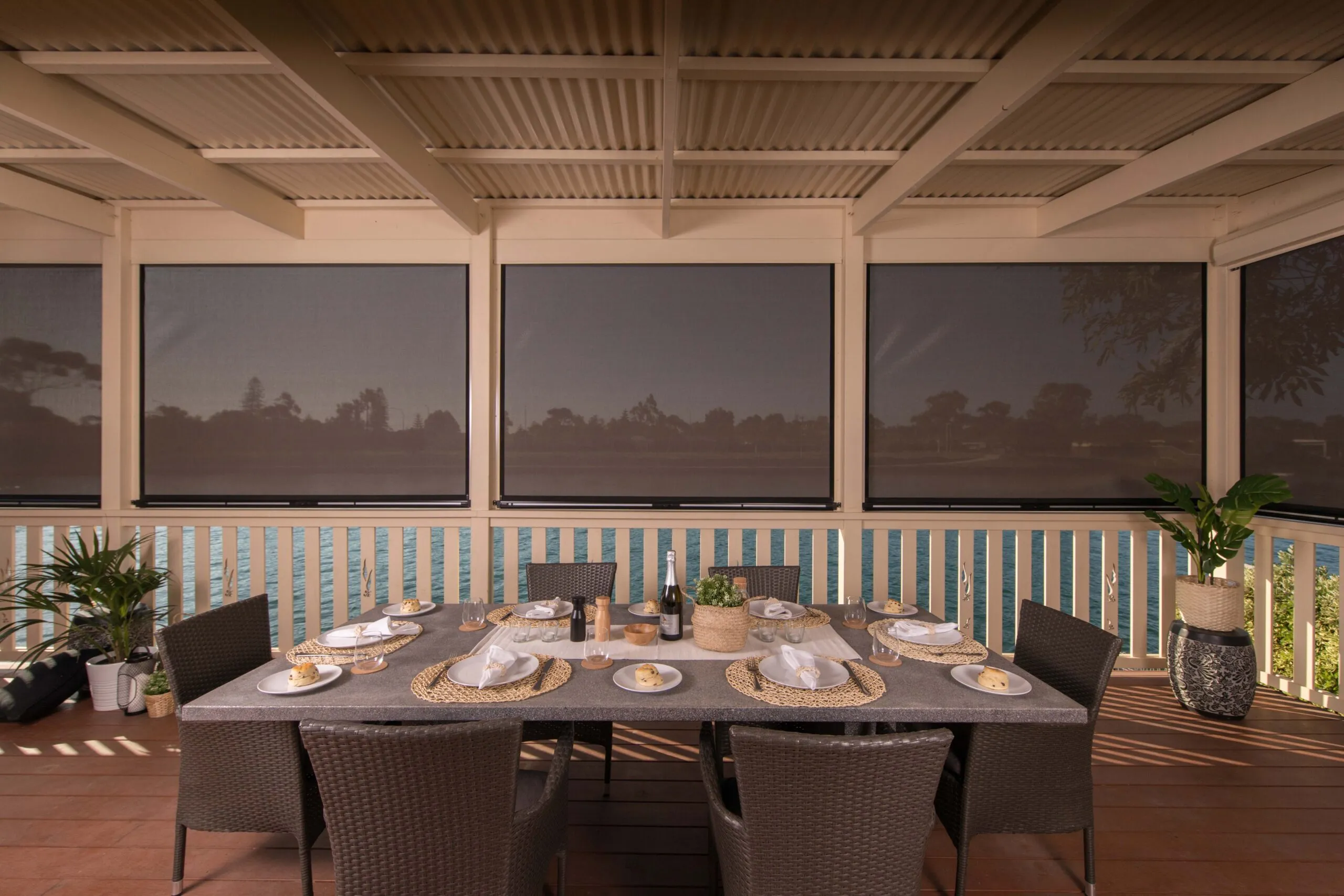
Looking to renovate your backyard and add a touch of style and comfort? You might’ve considered putting an outdoor awning above your patio area or decking, but what is the purpose of an awning? Below, we’ll talk about the reasons why you might install one (or more), as well as some other key facts that should help you come to a decision on whether to have one on your home.
The purpose of an awning
Awnings can do more than simply protect you from adverse weather. They can also protect your home and save you money when installed correctly and by an experienced tradesman. Here are the top three benefits of an awning.
- Protect your home from adverse weather A fixed canopy and a retractable awning have different uses. A suitably designed fixed structure may provide weather shelter, but its drainage, supports and engineering must suit the site. Retractable shade awnings are not storm shelters; follow their operating limits and retract before strong wind or rain when instructed and safe to do so.
- Reduce your energy bills External shade can reduce solar heat gain by intercepting sunlight before it reaches the glazing. UV is only one part of sunlight, so UV protection and heat reduction are different measures. Any effect on indoor temperature or energy use depends on the window, orientation, awning, weather and use of heating or cooling.
- Safeguard your home against water damage We’ve already talked about the benefit of protecting your home and its masonry from the weather. However, more specifically, a permanent outdoor awning can safeguard your home against one of its biggest threats: water damage. With constant exposure to moisture, your home is more susceptible to pests and mould growth. The latter can lead to health complications like coughing, airway irritation, and more. With a fixed awning, the most vulnerable parts of your home will be protected, such as your door casings, doors, and windows. Without protection, the materials in these components can quickly absorb water. The constant alternating between damp weather and dry, hot sun can lead to minute cracks and breakages in the materials, which will soon begin to allow the wind and rain in.
Types of awnings
Awnings come in a range of styles and materials, from canvas to metal. Here are three of the most common awnings we’ve installed for customers across South Australia.
Patio awnings
Folding-arm awnings extend from a wall-mounted frame to shade a patio or deck and retract when not required. They are different from tensioned shade sails and fixed canopies. Follow the model’s wind and rain instructions and retract before unsuitable weather arrives when safe to do so. For the sides of a patio or pergola, see side-tracked Ziptrak blinds.
Window and door awnings
This type of awning extends the protection offered by your roof over a window or a door’s threshold. In addition to protecting your entryways from water damage, they’ll keep you dry while you’re locking or unlocking the door.
Freestanding awnings
Freestanding awnings allow for greater freedom of placement as they’re not mounted to your home. They’re ordinarily mounted on supporting beams and can be custom fit to the desired space. Unlike patio and window or door awnings, they’re not normally left outside all year round, but they’ll provide shade on nice days when the wind is not too severe.
Get a free measure and quote
Crafting the perfect awning begins with choosing an industry leader that embraces cutting-edge products. At Stan Bond, we boast a rich history of producing and installing awnings in Adelaide. Curious about our work with blinds and awnings? Explore our awnings page for an inside look. Ready to transform your space? Contact us today for a personalised quote on your bespoke project.