

Indoor Blinds
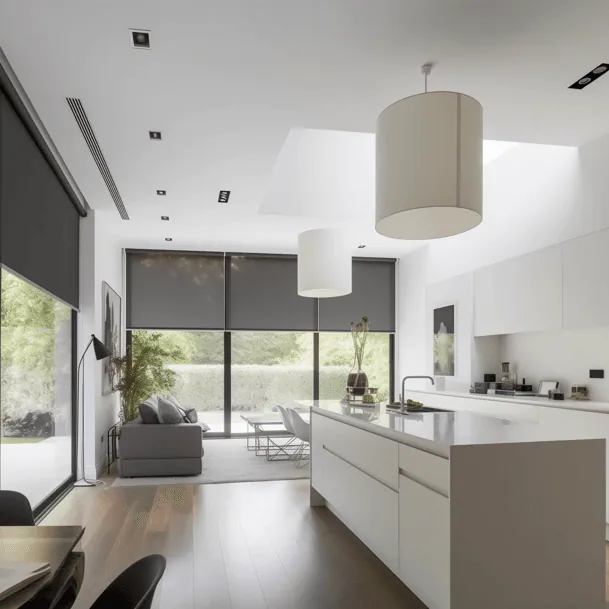
Motorised indoor blinds can make daily light and privacy control easier, especially for large or hard-to-reach windows. Plan the fabric, fitting, motor and controls together.
Start with each room
In bedrooms, discuss blockout fabric and the light that may remain around the edges. In living spaces, compare light-filtering fabric with a separate opaque layer for privacy after dark. Around doors, check clearance and everyday access before deciding where blinds should sit.
Choose the power supply
Battery motors can suit locations where a cable route is difficult, but need access for charging or battery replacement. Hardwired motors require an appropriate power supply and electrical work by a licensed electrician. Any solar-charging option must be confirmed for the specific motor, accessory and window exposure.
Decide how you want to operate the blinds
A compatible remote is one option. App control, timers, sensors and voice assistants depend on the selected motor and control system. Ask which hub or accessories are required and confirm compatibility with your existing smart-home platform before ordering. A hardwired motor does not automatically support every integration.
Cordless motor operation removes the hanging operating chain on that blind; it does not make the entire window area hazard-free. Follow the product’s installation and safety instructions.
From measure to installation
Our team can discuss your needs at a free measure and quote. Confirm the fabric, motor, controls and installation requirements in the written quote. Manufacture or supply and installation follow as separate stages, with timing confirmed for your order.
At handover, ask for a demonstration, charging and care instructions, and the model details needed for future support. Energy performance depends on the fabric, fitting, glazing and how you use the blinds; motorisation alone does not guarantee savings.
Explore motorised indoor blinds or request a free measure and quote.